

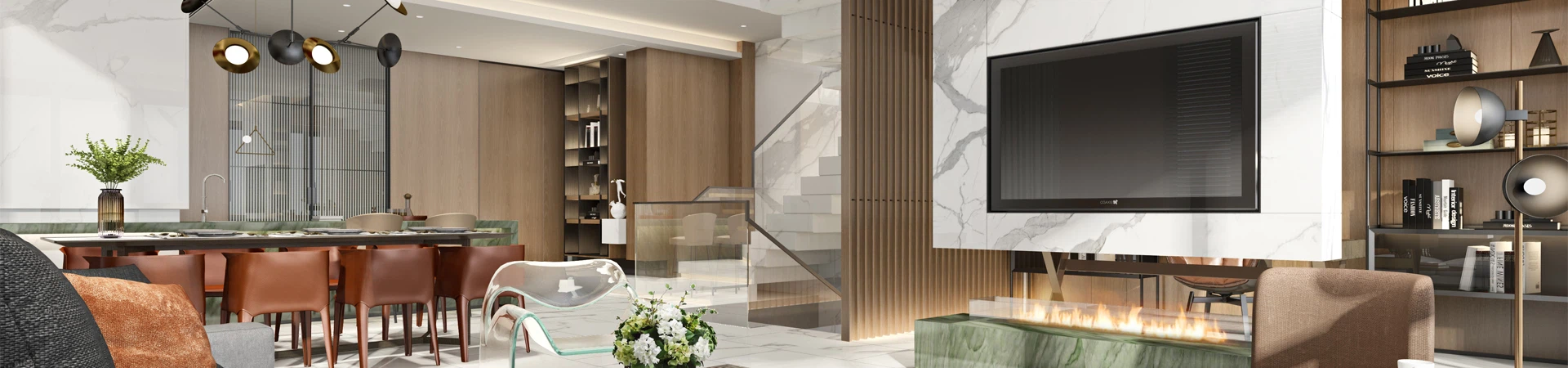


Elegant PVC Kitchen Cabinets
PVC finishes are available in a variety of colors, textures, and surface effects, including high-gloss, matte, wood grain, and other decorative finishes. This allows the cabinets to match different kitchen styles while providing a smooth and easy-to-clean surface.
Description
Technical Parameters

Product Description
Our custom PVC kitchen cabinets combine flexible design options with practical cabinet construction. The cabinet body can be manufactured from particleboard, MDF, or multi-layer plywood, while PVC film can be applied to selected door panels and components.
The cabinet system can be configured as U-shaped, L-shaped, straight-line, island, or other layouts according to the available kitchen space. Base cabinets, wall cabinets, tall cabinets, corner units, pantry cabinets, and appliance cabinets can be combined to create a complete kitchen storage system.
Products Description
| project | kitchen cabinet |
| Design Style | Modern |
| Cabinet Type | baseboard |
| Accessories | Backsplash, Drawer Basket, Drawer Slide, Faucet, Handle & Knob, Hinge, Lazy Susan Storage, RICE BOX, Sink, Toe Kick, Waste Container |
| Cabinet Material | Melamine boards, particle boards, multi-layer boards |
| Door Material | Particleboard, multilayer, solid wood |
| Door Panel Surface Treatment | Melamine, PVC film, solid wood, PET |
| colour | 50 colours available |
| Countertop Edging | Beveled Edge, Flat Edge / Eased Edge, Half Bullnose |
| size | customized size |
| Application | Kithcen Furniture |
| Packaging Details | Pre-assembled packing or disassembled packing as customer demand |
PVC Surface & Cabinet Materials
PVC kitchen cabinet doors can be manufactured using different core materials and surface finishes according to the application.
Available options include:
MDF
Particleboard
Multi-Layer Plywood
Solid Wood for Selected Components
PVC Film
Melamine
PET
Wood Grain Finishes
PVC film is available in high-gloss, matte, wood grain, and other decorative textures. The final material combination can be selected according to appearance, budget, durability requirements, and project conditions.

Custom Kitchen Design & Storage

PVC kitchen cabinets can be customized to suit different kitchen layouts and storage requirements.
Available configurations include:
Base Cabinets
Wall Cabinets
Tall Cabinets
Corner Cabinets
Island Cabinets
Sink Cabinets
Pantry Cabinets
Drawer Cabinets
Appliance Cabinets
Open Storage
Storage accessories can include drawer baskets, pull-out storage, Lazy Susan systems, rice box storage, waste containers, and other functional components.
Countertop & Hardware Options
PVC kitchen cabinets can be combined with different countertop materials, including quartz, stainless steel, artificial stone, and other project-specified options.
Countertop edge profiles include:
Beveled Edge
Flat Edge
Eased Edge
Half Bullnose Edge
Hardware options can include soft-close hinges, drawer slides, handles, knobs, and concealed handles according to the cabinet configuration and project budget.

FAQ
Q: 1. What is the load-bearing capacity of PVC kitchen cabinets?
A: The load-bearing capacity depends on the cabinet dimensions, panel thickness, internal structure, shelf span, hardware, installation method, and load distribution. Heavy items should be stored according to the specified capacity of the final cabinet configuration rather than using one fixed capacity for all PVC cabinets.
Q: 2. Are PVC kitchen cabinets suitable for outdoor kitchens?
A: PVC kitchen cabinets are primarily designed for indoor kitchen environments. Outdoor kitchens are exposed to sunlight, temperature changes, rain, humidity, and other environmental conditions, so material selection should be evaluated separately. For outdoor applications, the complete cabinet construction and material specification should be confirmed according to the local environment.
Q: 3. What is the difference between PVC kitchen cabinets and solid wood kitchen cabinets?
A: PVC kitchen cabinets generally use MDF, particleboard, or plywood with a PVC surface finish, while solid wood cabinets use natural timber for selected or major structural components. PVC cabinets offer a wide range of colors and surface textures, while solid wood provides a natural wood appearance and grain variation.
Q: 4. Can PVC kitchen cabinets resist oil smoke and high temperature?
A: PVC cabinet surfaces are suitable for normal kitchen conditions and can be cleaned relatively easily. However, prolonged exposure to high temperatures, direct heat, or concentrated oil smoke can affect the surface over time. Proper ventilation and appropriate clearance around cooking appliances are recommended.
Q: 5. Can the door panels of PVC kitchen cabinets be replaced?
A: Yes. Door panels can generally be replaced when the cabinet structure remains suitable for continued use. Replacement compatibility depends on the door dimensions, hinges, mounting positions, cabinet configuration, and selected panel material.
Q: 6. What issues should be considered when installing PVC kitchen cabinets?
A: Installation should consider actual room dimensions, wall conditions, plumbing, electrical connections, appliance sizes, countertop dimensions, and cabinet alignment. Proper edge protection and sealing are particularly important in areas exposed to water, such as sink cabinets.
Q: 7. What is the production process of PVC kitchen cabinets?
A: The production process typically includes material cutting, CNC machining, drilling, edge processing, PVC film application through vacuum forming or hot-press lamination where applicable, hardware installation, cabinet assembly, quality inspection, and packaging.
Q: 8. What is the environmental performance of PVC kitchen cabinets?
A: Environmental performance depends on the core board, PVC material, adhesives, coatings, and other components used in the final cabinet. Different board emission grades and material specifications can be selected according to project and destination-market requirements. The final environmental compliance should be confirmed based on the complete material configuration.
Q: 9. What colors and finishes are available for PVC kitchen cabinets?
A: PVC kitchen cabinets can be supplied in high-gloss, matte, wood grain, and other decorative finishes. Approximately 50 colors are available for selected configurations, allowing the cabinets to be matched with different kitchen styles and countertop materials.
Q: 10. Can PVC kitchen cabinets be customized for an entire kitchen?
A: Yes. Cabinet dimensions, layout, door styles, colors, storage modules, countertops, hardware, sinks, faucets, and appliance integration can be customized. KLJ Wood can develop the cabinet configuration according to kitchen dimensions and project requirements.
Hot Tags: elegant PVC kitchen cabinets, China elegant PVC kitchen cabinets manufacturers, suppliers, factory, volumes of kitchen cabinet
Send Inquiry


